The phrase third wheeling meaning in relationship is becoming increasingly popular, especially among people navigating modern friendships and dating.
Many individuals search for this term because they have experienced situations where they felt out of place while spending time with a couple.
Whether it happens during a casual hangout, a double date gone wrong, or even within close friendships, being a “third wheel” can feel awkward, uncomfortable, or even emotionally confusing.
In relationships, this concept highlights social dynamics and emotional boundaries.
People want to understand not only what it means, but also how it affects personal connections, self-esteem, and communication.
As social interactions continue to shift through online platforms, group outings, and dating apps, understanding this term helps individuals recognize their role in different relationship settings and respond in a healthy, confident way.
Definition & Meaning
The third wheeling meaning in relationship refers to the experience of being an extra person when two individuals are romantically involved and deeply focused on each other. The third person often feels unnecessary, ignored, or excluded from meaningful interaction.
In simple terms, a third wheel is someone who is present in a situation where their presence is not essential and sometimes even awkward. The phrase does not always imply negativity, but it often carries emotional weight because it highlights imbalance in attention and connection.
For example:
- Hanging out with a couple who constantly show affection.
- Being invited to a date-like setting with two people already in a relationship.
- Joining a group where one romantic pair dominates the interaction.
The core meaning revolves around social imbalance, not rejection. It reflects a mismatch in emotional roles rather than intentional exclusion.
Background & History
The concept of third wheeling existed long before the phrase itself became popular. Historically, social groups often emphasized pairing and marriage, making single individuals feel like outsiders in couple-centric settings.
The term “third wheel” comes from the idea that a vehicle needs only two wheels to function properly in balance (like a bicycle), and an extra wheel becomes unnecessary. Over time, this metaphor evolved into a social expression used in casual speech.
With the rise of pop culture, movies, and social media, the phrase gained popularity as a humorous but relatable label for awkward social situations. Today, it is commonly used in memes, dating conversations, and online discussions about relationships.
Usage in Various Contexts
The third wheeling meaning in relationship changes slightly depending on context:
- Friendships: A single friend hanging out with a couple.
- Family: A sibling feeling excluded when spending time with a married couple.
- Workplace: Being left out during lunch conversations between two close colleagues.
- Dating: Joining a group date where one pair dominates attention.
Sometimes, third wheeling is temporary and harmless. Other times, it can signal emotional boundaries or a need for better communication.
Common Misconceptions & Clarifications
One major misconception is that third wheeling always means rejection. In reality, many people become third wheels unintentionally, simply due to circumstances.
Another misunderstanding is that it always implies negativity. Some people enjoy being a third wheel, especially if the couple makes an effort to include them.
Third wheeling does not mean:
- You are unwanted.
- You are interfering.
- You are doing something wrong.
It simply describes a social role, not a personal failure.
Similar Terms & Alternatives
Several expressions are used interchangeably with third wheeling:
- Fifth wheel: When there are more extra people.
- Tag along: Someone who joins without being central.
- Extra: Slang for someone not directly involved.
- Outsider: More formal and emotionally neutral.
Each term reflects a similar idea but with slightly different emotional tones.
How to Respond to This Term
If you find yourself third wheeling, your response depends on your comfort level:
- Communicate openly: Let friends know how you feel.
- Change the setting: Suggest group activities instead of couple-focused plans.
- Embrace independence: Use the time to connect with others.
- Set boundaries: It’s okay to decline invitations that make you uncomfortable.
Confidence and self-awareness are key. Being a third wheel is situational, not personal.
Regional or Cultural Differences
The third wheeling meaning in relationship is widely understood in Western cultures, especially in English-speaking countries. However, cultural attitudes vary:
- In collectivist cultures, group settings are more common, so third wheeling feels less awkward.
- In individualistic cultures, romantic exclusivity is emphasized, making third wheeling more noticeable.
- Some cultures avoid the term altogether but recognize the experience through different expressions.
The emotional impact depends largely on social norms and expectations.
Comparison with Similar Terms
Compared to “being left out,” third wheeling is more specific. It focuses on romantic imbalance rather than general exclusion.
Unlike “lonely,” third wheeling is situational and temporary, not a long-term emotional state.
It sits between social discomfort and emotional awareness, making it a unique concept.
Usage in Online Communities & Dating Apps
On dating apps and social platforms, third wheeling often appears in bios, jokes, and memes. People use it humorously to describe past experiences or express current feelings.
Common examples include:
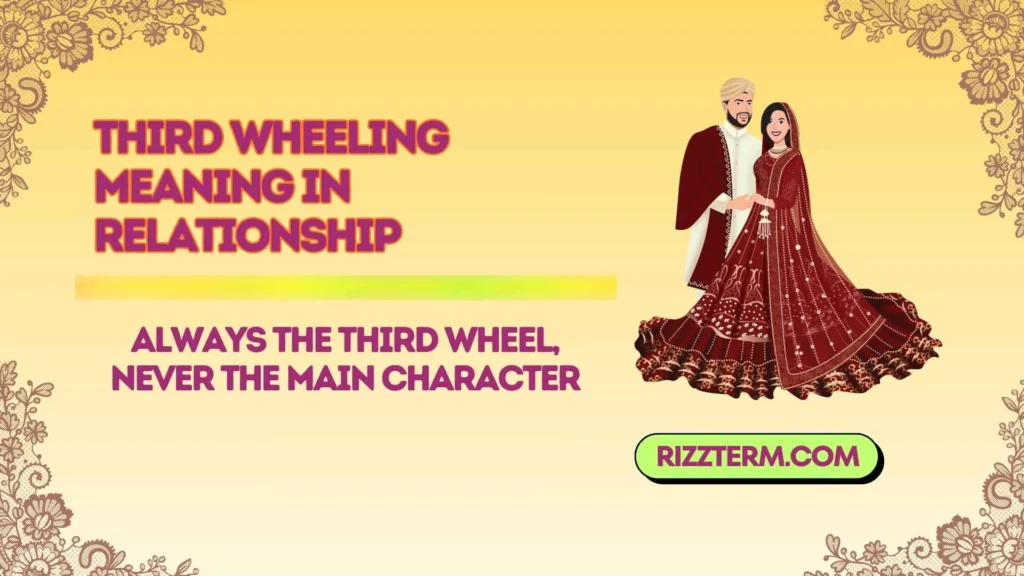
- “Always the third wheel, never the main character.”
- “Looking for someone so I stop third wheeling my friends.”
In online spaces, the term builds connection through shared experience and humor.
Hidden or Offensive Meanings
The phrase itself is not offensive, but it can feel hurtful if used carelessly. Calling someone a third wheel may unintentionally highlight their exclusion.
It becomes problematic only when:
- Used to mock someone.
- Said repeatedly without sensitivity.
- Used to dismiss someone’s feelings.
Respectful communication prevents emotional harm.
Suitability for Professional Communication
In professional settings, using “third wheel” is generally informal. It may be acceptable in casual conversations but not in formal emails, reports, or meetings.
In professional language, alternatives include:
- “Not directly involved”
- “Peripheral participant”
- “Observer”
These terms maintain clarity without emotional undertones.
FAQs:
What does third wheeling mean in a relationship?
It means being an extra person when two others are romantically involved.
Is third wheeling always negative?
No, it depends on the situation and how included you feel.
Can couples avoid making someone feel like a third wheel?
Yes, by actively including everyone in conversations and activities.
Is third wheeling common in friendships?
Very common, especially when one friend enters a relationship.
Does third wheeling affect mental health?
It can cause discomfort but usually has temporary emotional impact.
Should I stop hanging out if I feel like a third wheel?
Only if it consistently makes you uncomfortable or excluded.
Conclusion:
Understanding the third wheeling meaning in relationship helps people navigatesocial and emotional dynamics with clarity.
It describes a common human experience rooted in social imbalance rather than rejection.
While it can feel awkward, third wheeling is often temporary and manageable through communication, confidence, and emotional awareness.
Rather than seeing it as a weakness, it can be viewed as a signal to reassess social boundaries and personal needs.
Recognizing your role in any social situation empowers you to choose environments that make you feel valued, respected, and emotionally comfortable.

Hi, I’m Mark Jacob, the writer behind Rizzterm — where confidence meets clever conversation. I craft smooth rizz lines, playful wordplay, and charm-packed phrases that make talking easier and flirting more fun. My goal is simple: turn everyday words into instant vibe and connection. If it sparks a smile, it’s Rizzterm ready.