In today’s evolving social landscape, relationship terms are constantly expanding, and many people search for “inclusive relationship meaning” to better understand how relationships can embrace diversity, respect, and equality. This term reflects a growing awareness of emotional, cultural, and identity-based inclusion in personal connections.
An inclusive relationship goes beyond traditional expectations. It focuses on mutual respect, open communication, and acceptance of differences—whether related to gender identity, culture, beliefs, or personal preferences. As conversations around inclusivity increase, so does curiosity about how it applies to relationships.
Understanding this concept helps individuals build healthier, more respectful bonds. It also encourages awareness of how relationships can adapt to modern values without losing authenticity or emotional depth.
Definition & Meaning
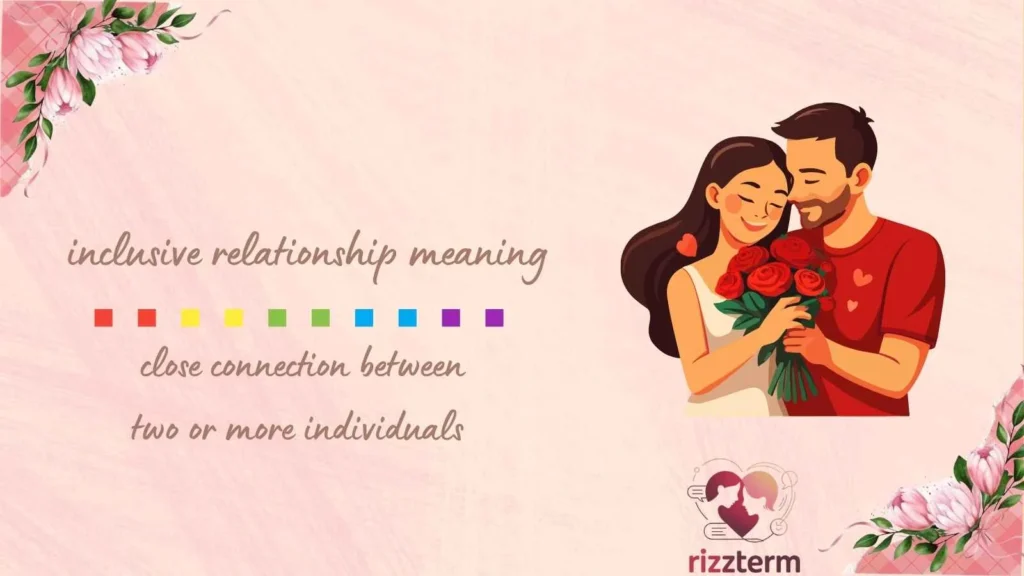
An inclusive relationship refers to a connection between individuals where all parties feel respected, valued, and accepted regardless of their identity, background, or personal differences. It emphasizes equality, emotional safety, and open-mindedness.
In simple terms, it means:
- Accepting your partner as they are
- Respecting differences in identity, culture, and beliefs
- Encouraging honest and judgment-free communication
Unlike traditional relationship models that may follow rigid roles or expectations, inclusive relationships are flexible. They prioritize understanding over conformity and empathy over control.
Key elements include:
- Respect: Acknowledging each person’s individuality
- Equality: No one dominates or invalidates the other
- Support: Encouraging growth and self-expression
This concept is not limited to romantic relationships. It can apply to friendships, family bonds, and even workplace interactions.
Background & History
The idea of inclusive relationships has roots in broader social movements focused on equality and human rights. As societies began to challenge rigid norms around gender, race, and identity, the concept of inclusion naturally extended into personal relationships.
Historically, relationships often followed fixed roles influenced by culture, religion, and societal expectations. However, as awareness about diversity increased—especially during the late 20th and early 21st centuries—people began redefining what healthy relationships look like.
Major influences include:
- LGBTQ+ rights movements
- Feminist movements promoting equality
- Globalization encouraging cross-cultural relationships
- Mental health awareness emphasizing emotional safety
Over time, these influences shaped a more inclusive understanding of relationships. Today, inclusivity is seen as a key factor in building strong, lasting connections.
Usage in Various Contexts
The term is used in multiple contexts, each slightly different in application:
1. Romantic Relationships
Here, it refers to partners respecting each other’s identities, boundaries, and personal growth.
2. Friendships
Inclusivity means accepting differences in lifestyle, beliefs, and backgrounds without judgment.
3. Workplace Relationships
It emphasizes respect, diversity, and equal opportunities among colleagues.
4. Social Media & Online Spaces
People often use the term to describe open-minded dating preferences or progressive attitudes.
In all contexts, the core idea remains the same: creating a safe and respectful environment for everyone involved.
Common Misconceptions & Clarifications
Many people misunderstand the concept. Here are some clarifications:
- Myth: Inclusive relationships mean having no boundaries
Reality: Healthy boundaries are essential for respect - Myth: It only applies to LGBTQ+ relationships
Reality: It applies to all types of relationships - Myth: Inclusivity removes traditional values
Reality: It allows individuals to choose what works best for them
Understanding these differences helps avoid confusion and promotes a more accurate interpretation.
Similar Terms & Alternatives
| Term | Meaning |
|---|---|
| Open Relationship | Partners agree to romantic/sexual connections outside |
| Equal Partnership | Focus on fairness and shared responsibilities |
| Respectful Relationship | Emphasis on mutual respect and communication |
| Diverse Relationship | Involves people from different backgrounds |
| Healthy Relationship | Focus on emotional and psychological well-being |
While these terms overlap, an inclusive relationship is broader and focuses primarily on acceptance and respect for differences.
How to Respond to This Term
When someone mentions an inclusive relationship, a thoughtful response can help maintain a positive conversation.
You can:
- Ask for clarification: “What does inclusivity mean to you?”
- Show openness: “That sounds like a respectful approach.”
- Share your perspective respectfully
Avoid making assumptions, as inclusivity can mean different things to different people.
Regional or Cultural Differences
The interpretation of inclusivity can vary across cultures. In some regions, traditional values may still dominate relationship expectations, while in others, progressive ideas are more widely accepted.
For example:
- Western cultures may emphasize individuality and identity
- Eastern cultures may focus more on family and collective values
Despite these differences, the core idea of respect and understanding remains universal.
Comparison with Similar Terms Usage in Online Communities & Dating Apps
In online communities and dating apps, the term often appears in profiles or discussions.
- It may indicate openness to diverse identities
- It can signal emotional maturity and respect
- Sometimes it’s used to attract like-minded individuals
However, it’s important to distinguish between genuine inclusivity and surface-level use for appearance.
Hidden or Offensive Meanings
Generally, the term is positive and respectful. However, misuse can occur when:
- It’s used superficially without real understanding
- It becomes a label rather than a practice
There are no inherently offensive meanings, but intention and behavior matter more than the label itself.
Suitability for Professional Communication
The term is appropriate in professional settings, especially in discussions about:
- Workplace culture
- Diversity and inclusion
- Team collaboration
However, it should be used thoughtfully and clearly to avoid ambiguity.
FAQs:
What is an inclusive relationship in simple terms?
It means a relationship based on respect, acceptance, and equality between individuals.
Is an inclusive relationship only about gender identity?
No, it includes respect for culture, beliefs, personality, and more.
Can traditional relationships be inclusive?
Yes, as long as both partners respect and value each other equally.
Is inclusivity the same as being open-minded?
They are related, but inclusivity involves active acceptance, not just openness.
Do inclusive relationships have boundaries?
Yes, healthy boundaries are essential for mutual respect.
Why is inclusivity important in relationships?
It creates emotional safety, trust, and long-term stability.
Conclusion:
An inclusive relationship is more than a modern trend—it reflects a shift toward deeper understanding and respect in human connections. It encourages individuals to embrace differences while building strong emotional bonds.
By focusing on equality, empathy, and open communication, such relationships create a safe and supportive environment. This allows both partners to grow individually and together without fear of judgment.
As society continues to evolve, inclusivity will remain a key factor in defining healthy and meaningful relationships.

Hi, I’m Lisa Brook, the writer behind Rizzterm — a space where smooth words meet serious charm. I create clever rizz lines, playful expressions, and confidence-boosting phrases that help conversations flow naturally. My goal is to turn simple words into memorable moments, making flirting fun, light, and effortless. Through Rizzterm, I share the kind of lines that spark smiles and keep the vibe strong.